Amsterdam

jueves, 28 de agosto de 2014

Location & Weather
According to the Netherlands constitution, Amsterdam is the capital of the country, this city is located in the North Province and it's cosidered as one of the hugest metropolitan areas in the european continent.


Due to its canals is also known as Venice of the north:

Due to Amsterdam is located in a zone with seasons its wether depends of the month:
Winter(December-March):
This season of the year has a weather pretty cold due to the highest temperature is close to 9°C and the lowest is about -1°C.
Spring(April-May):
Spring is a season a little wet but with a fresh and temeperate weather.
Summer(June-August):
Although summer is a season well know for its really hot temperatures, in Amsterdam it is not like that, the average temperature is between the 25 and 12°C.
Autumn(September-November):
The weather in this moments of the year is temperate but as tis season is characterized it is really windy.
Due to its canals is also known as Venice of the north:
Due to Amsterdam is located in a zone with seasons its wether depends of the month:
Winter(December-March):
This season of the year has a weather pretty cold due to the highest temperature is close to 9°C and the lowest is about -1°C.
Spring(April-May):
Spring is a season a little wet but with a fresh and temeperate weather.
Summer(June-August):
Although summer is a season well know for its really hot temperatures, in Amsterdam it is not like that, the average temperature is between the 25 and 12°C.
Autumn(September-November):
The weather in this moments of the year is temperate but as tis season is characterized it is really windy.


Problems
Problematics: The principal problematics of the city are: 1. problem with the houses, because it's a city that has many employement oportunities, so every people of Netherlands go there and stay living.
2. Problem with the money and infrastructure, there are many people in Amsterdam but these people are not living in good conditions because all the money necessary to build houses and infraestructure have been spent in the proyect of the metro that cross the city, and some companies take the money for themselves.
3. Insecurity in Amsterdam, especially in Rosse Burt
4. Problems with the rouds, specially with the bicycle, there aren't space for many bicycles in the roads and this make a problem with trafic and mobility.
5. Today it is not a problem with much repercussions but is important mention it. The city has or had houses on places that are dangerous and unstable for people who lives in the city, but fortunatelly this problematic is being avoid

environment
1 The Amsterdam Smart City project is an ambitious project that many companies and different sectors of the city are working together to make a goal that rotate Amsterdam ment more efficient energy. The project is not only jobs with the environment and human health, are also better use of energy and employment.
2.The Amsterdam Treaty signed October 2, 1997, in force since 1 May 1996, finally introduced the concept of "sustainable development" as a key objective of the European Union, same as shown in the art. 2 European Union and in the arts. 2 and 6 of the EC. At the same art. 2 of the EC in order to achieve "a high level of protection and improvement of the quality of the environment" is established. In addition, the Treaty reinforced the principle of integrating the requirements of environmental protection, the definition and implementation of policies and actions of the community, to promote tourism. Thus the move to the forefront in the EU [17].
On the other hand, changed environmental policy on the basis that became art. 3.1 "L" TEC also widespread codecision art. 251 TEC, I finally extracted the principle of integration of art. 174 (where it was in the Maastricht Treaty)

Urban Art:
From Dam Square callejeamos a mile and enter Spuistraat, a street that impresses not only by the murals, drawings, but because there are two walls completely covered by a large drawing. Specifically these two buildings are two squatter dwellings (occupancy was legal until 2010 in Amsterdam, and prohibited, allowed the assignment of these two buildings for groups of artists who have a little money study for a while and instead of exposing their works for free. which seems to me great and necessary) deserves much worth looking street until we found a painted for the cause of the Asturian miners curious.
Another form of very rapid urban art, stencil or stencils. The image is drawn on cardboard, the gaps are cut and placed on the wall then applying a spray, in a few seconds we have our printed pattern.
Urban art tiles. In many places we can find pictures on tiles, corners, walls, streets, in the most unexpected places. This art form removable for many people will be seen as a form of littering the street, for me personally it is an art form and make the streets a free museum for everyone.
Another form of very curious and quick to capture art, stickers or stickers. Is the classic small sticker, which kicked Amsterdam are by all corners streetlights and street furniture, and is his artistic evolution, large paper templates with drawing already made, which are fixed to the wall with glue and sometimes lacquer spray to encourage conservation. Splitting hairs to this technique is a Dutch artist Max Zorn creates his works with brown tape on plexiglass and placed on streetlights in your town to give a tremendous effect. Placing layers of tape form images inspired by cinema or art and turns the streets of Amsterdam in a makeshift gallery night.
Finally a quick mention about the variety of street performers who play instruments, sing, motionless sculptures etc ... that are spread Damplein, Spuisplein or place at the end of Leindsplein where I was stunned seeing a turkey pokes a ball football, as he put it "better than Messi better than Ronaldo" and some truth would be because the guy was climbing a lamppost without losing control of the ball ... and got to the end, giving touches the ball.
2. Problem with the money and infrastructure, there are many people in Amsterdam but these people are not living in good conditions because all the money necessary to build houses and infraestructure have been spent in the proyect of the metro that cross the city, and some companies take the money for themselves.
3. Insecurity in Amsterdam, especially in Rosse Burt
4. Problems with the rouds, specially with the bicycle, there aren't space for many bicycles in the roads and this make a problem with trafic and mobility.
5. Today it is not a problem with much repercussions but is important mention it. The city has or had houses on places that are dangerous and unstable for people who lives in the city, but fortunatelly this problematic is being avoid
environment
1 The Amsterdam Smart City project is an ambitious project that many companies and different sectors of the city are working together to make a goal that rotate Amsterdam ment more efficient energy. The project is not only jobs with the environment and human health, are also better use of energy and employment.
2.The Amsterdam Treaty signed October 2, 1997, in force since 1 May 1996, finally introduced the concept of "sustainable development" as a key objective of the European Union, same as shown in the art. 2 European Union and in the arts. 2 and 6 of the EC. At the same art. 2 of the EC in order to achieve "a high level of protection and improvement of the quality of the environment" is established. In addition, the Treaty reinforced the principle of integrating the requirements of environmental protection, the definition and implementation of policies and actions of the community, to promote tourism. Thus the move to the forefront in the EU [17].
On the other hand, changed environmental policy on the basis that became art. 3.1 "L" TEC also widespread codecision art. 251 TEC, I finally extracted the principle of integration of art. 174 (where it was in the Maastricht Treaty)
Urban Art:
From Dam Square callejeamos a mile and enter Spuistraat, a street that impresses not only by the murals, drawings, but because there are two walls completely covered by a large drawing. Specifically these two buildings are two squatter dwellings (occupancy was legal until 2010 in Amsterdam, and prohibited, allowed the assignment of these two buildings for groups of artists who have a little money study for a while and instead of exposing their works for free. which seems to me great and necessary) deserves much worth looking street until we found a painted for the cause of the Asturian miners curious.
Another form of very rapid urban art, stencil or stencils. The image is drawn on cardboard, the gaps are cut and placed on the wall then applying a spray, in a few seconds we have our printed pattern.
Urban art tiles. In many places we can find pictures on tiles, corners, walls, streets, in the most unexpected places. This art form removable for many people will be seen as a form of littering the street, for me personally it is an art form and make the streets a free museum for everyone.
Another form of very curious and quick to capture art, stickers or stickers. Is the classic small sticker, which kicked Amsterdam are by all corners streetlights and street furniture, and is his artistic evolution, large paper templates with drawing already made, which are fixed to the wall with glue and sometimes lacquer spray to encourage conservation. Splitting hairs to this technique is a Dutch artist Max Zorn creates his works with brown tape on plexiglass and placed on streetlights in your town to give a tremendous effect. Placing layers of tape form images inspired by cinema or art and turns the streets of Amsterdam in a makeshift gallery night.
Finally a quick mention about the variety of street performers who play instruments, sing, motionless sculptures etc ... that are spread Damplein, Spuisplein or place at the end of Leindsplein where I was stunned seeing a turkey pokes a ball football, as he put it "better than Messi better than Ronaldo" and some truth would be because the guy was climbing a lamppost without losing control of the ball ... and got to the end, giving touches the ball.
miércoles, 27 de agosto de 2014
Amsterdam Nowadays
It is the commercial capital of the Netherlands and one of the top financial centres in Europe. Amsterdam is considered an alpha world city. It is also the cultural capital of the Netherlands. Seven of the world's 500 largest companies are based in the city. Amsterdam was ranked the second best city to live by the Economist Intelligence Unit (EIU) and 12th globally on quality of living by Mercer.
The Amsterdam Stock Exchange is the oldest one in the world. Amsterdam's main attractions, including its historic canals, the Rijksmuseum, the Van Gogh Museum, Stedelijk Museum, Hermitage Amsterdam, Anne Frank House, Amsterdam Museum, its red-light district, and its many cannabis coffee shops draw more than 3.66 million international visitors annually.
Amsterdam is one of the most popular tourist destinations in Europe, receiving more than 4.63 million international visitors annually, this is excluding the 16 million day trippers visiting the city every year.
Amsterdam is famous for its vibrant and diverse nightlife. Amsterdam has many cafés (bars). Amsterdam is also recognize as a multicultural city. The city also possesses many discothèques. The two main nightlife areas for tourists are the Leidseplein and the Rembrandtplein. The Paradiso, Melkweg and Sugar Factory are cultural centres, which turn into discothèques on some nights.

The first prostitution museum
Amsterdam opens in the red neighborhood the first prostitution museum. The visitants will see how the brothels work and, also, the rooms and methods.
The museum shows the history of the prostitution in the city, since the XVI century until the 2000 year, when it became in a legalized practice in Netherlands.
The price is of 7 euros approximately.

Architecture
Amsterdam has a rich architectural history. The oldest
building in Amsterdam is the Oude Kerk (Old Church), at the heart of the
Wallen, consecrated in 1306The oldest wooden building is het Houten Huys at the
Begijnhof. It was constructed around 1425 and is one of only two existing
wooden buildings.Amsterdam quickly developed its own Renaissance architecture.
These buildings were built according to the principles of the architect
Hendrick de Keyser
Throughout the 18th century, Amsterdam was heavily
influenced by French culture. This is reflected in the architecture of that
period.The last style that was popular in Amsterdam before the modern era was
Art Deco. Amsterdam had its own version of the style, which was called the Amsterdamse
School. Whole districts were built this style, such as the Rivierenbuurt. A
notable feature of the façades of buildings designed in Amsterdamse School is
that they are highly decorated and ornate, with oddly shaped windows and doors.
Most historic buildings in the city centre and nearby
are houses, such as the famous merchants' houses lining the canals. The oldest
area of the town is known as de Wallen (the quays).The Amsterdam canal system
is the result of conscious city planning.The defences took the form of a moat
and earthen dikes, with gates at transit points, but otherwise no masonry
superstructures
After the Second World War, large new neighbourhoods
were built in the western, southeastern, and northern parts of the city. These
new neighbourhoods were built to relieve the city's shortage of living space
and give people affordable houses with modern conveniences. The neighbourhoods
consisted mainly of large housing blocks situated among green spaces, connected
to wide roads, making the neighbourhoods easily accessible by motor car.
The city has many open squares (plein in Dutch). The
namesake of the city as the site of the original dam, Dam Square, is the main
town square and has the Royal Palace and National Monument. Museumplein hosts
various museums, including the Rijksmuseum, Van Gogh Museum, and Stedelijk
Museum. Other squares include Rembrandtplein, Muntplein, Nieuwmarkt,
Leidseplein, Spui, and Waterlooplein.


Population
-Amsterdam
has a population of 813,562 within the city-proper, 1,112,165 in the urban region and 1,575,263 in
the greater metropolitan area.
-The ethnic makeup of
Amsterdam was 49.5% of Dutch ancestry and 50.5% of foreign origin
-The
largest religious groups are Christians (17% in 2000), who are
divided between Roman Catholics and Protestants. The next largest religion is
Islam (14% in 2000), most of whose followers are Sunni
-It´s distribute: Men 366,155 l Women
376,628
-Amsterdam is home to one of the widest varieties of
nationalities of any city in the world.The share of the population of immigrant
ancestry in the city proper now is about 50%.
Immigration has developed in
different waves. In the sixteenth century, the Spanish crown independence from
the Republic of the Seven Provinces Northern Protestants fled to Holland in the
Flemish cities, Ghent, Bruges and Antwerp. The arrival of Sephardic Jews dates
from the same era. In the eighteenth century sought refuge in Amsterdam French
Huguenots; in the nineteenth century, waves of German peasants crossed borders,
beset by hardship in the field caused by wars. And, as in Europe, the
industrial revolution brought to Amsterdam Dutch field.
Population:
|
|
• Municipality
|
813,562
|
• Density
|
4,908/km2 (12,710/sq mi)
|
• Urban
|
1,112,165
|
• Metro
|
1,575,263
|

martes, 26 de agosto de 2014
Music
Amsterdam's musical culture includes a
large collection of songs which treat the city nostalgically and lovingly. The
1949 song "Aan de Amsterdamse grachten" ("On the canals of
Amsterdam") was performed and recorded by many artists, including John
Kraaijkamp sr.; the best-known version is probably that by Wim Sonneveld
(1962). In the 1950s Johnny Jordaan rose to fame with "Geef mij maar
Amsterdam" ("I prefer Amsterdam"), which praises the city above
all others (explicitly Paris); Jordaan sang especially about his own
neighborhood, the Jordaan ("Bij ons in de Jordaan"). Colleagues and
contemporaries of Johnny include Tante Leen, Zwarte Riek, and Manke Nelis.
Other notable Amsterdam songs are "Amsterdam" by Jacques Brel (1964)
and "Deze Stad" by De Dijk (1989).[109] A 2011 poll by Amsterdam
paper Het Parool found, somewhat surprisingly, that Trio Bier's "Oude
Wolf" was voted "Amsterdams lijflied".[110] Notable Amsterdam
bands from the modern era include the Osdorp Posse and The Ex.
The Heineken Music Hall is a concert hall
located near the Amsterdam ArenA. Its main purpose is to serve as a podium for
pop concerts for big audiences. Many famous international artists have
performed there. Two other notable venues, Paradiso and the Melkweg are located
near the Leidseplein. Both focus on broad programming, ranging from indie rock
to hip hop, R&B, and other popular genres. Other more subculturally focused
music venues are OCCII, OT301, De Nieuwe Anita, Winston Kingdom and Zaal 100.
Jazz has a strong following in Amsterdam, with the Bimhuis being the premier
venue. In 2012, Ziggo Dome was opened, also near Amsterdam ArenA, a state of
the art indoor music arena.
The Heineken Music Hall is also host to
many electronic dance music festivals, alongside many other venues. Armin van
Buuren and Tiesto, some of the worlds leading Trance DJ's hail from the
Netherlands and perform frequently in Amsterdam. Each year in October, the city
hosts the Amsterdam Dance Event (ADE) which is one of the leading electronic
music conferences and one of the biggest club festivals for electronic music in
the world. Another popular dance festival is 5daysoff, which takes place in the
venues Paradiso and Melkweg. In summer time there are several big outdoor dance
parties in or nearby Amsterdam, such as Awakenings, Dance Valley, Mystery Land,
Loveland, A Day at the Park, Welcome to the Future, and Valtifest.
Amsterdam has a world-class symphony
orchestra, the Royal Concertgebouw Orchestra. Their home is the Concertgebouw,
which is across the Van Baerlestraat from the Museum Square. It is considered
by critics to be a concert hall with some of the best acoustics in the world. The
building contains three halls, Grote Zaal, Kleine Zaal, and Spiegelzaal. Some
nine hundred concerts and other events per year take place in the
Concertgebouw, for a public of over 700,000, making it one of the most-visited
concert halls in the world. The opera house of Amsterdam is situated adjacent
to the city hall. Therefore, the two buildings combined are often called the
Stopera, (a word originally coined by protesters against it very construction:
Stop the Opera. This huge modern complex, opened in 1986, lies in the former
Jewish neighbourhood at Waterlooplein next to the river Amstel. The Stopera is
the homebase of Dutch National Opera, Dutch National Ballet and the Holland
Symfonia. Muziekgebouw aan 't IJ is a concert hall, which is situated in the IJ
near the central station. Its concerts perform mostly modern classical music.
Located adjacent to it, is the Bimhuis, a concert hall for improvised and Jazz
music.
Amsterdam's Fashion
Famous brands
G-start Raw
Is a Dutch designer clothing company founded in Amsterdam in 1989. It produces urban clothing. It was showcased at the New York Fashion Week from 2008 to 2011.
The brand specializes in making raw denim (an unwashed, untreated denim). G-Star is influenced by military clothing. Inspirations of their designs come from vintage military apparel from around the world. Some examples include special pockets constructions and the use of trims.
G-Star Raw has stores in New York City, San Francisco, Los Angeles, Edinburgh, Melbourne, Sydney, Paris, London, Cardiff, Santiago de Chile and the Netherlands in the most luxurious shopping street of Amsterdam, the P.C. Hooftstraat. In total, G-Star has more than 6500 selling points world wide.

10 feet
It is a Dutch fashion label, based in Amsterdam and is a subsidiary of Herb Industries. The label was founded in the late 1990s, and has since grown to the point where its clothes are now offered in over 250 retail outlets in the Netherlands.
Warmenhoven & Venderbos
It is form by Sascha Warmenhoven and Babette Venderbos.Their first collection was launched in 1996.
The brand designs conceptual fashion pieces that are futuristically minimal. Black and white remains consistent with many of their collections.
Their collections are released twice a year: one for autumn/winter and another for spring/summer. Some of the pieces are exhibited in abstract form, paralleling the designers' philosophies on fashion, art and body.

Fashion designers
Iris Van Herpen
Iris van Herpen (born 5 June 1984) is a Dutch fashion designer. She studied Fashion Design at Artez Institute of the Arts Arnhem and interned at Alexander McQueen in London, and Claudy Jongstra in Amsterdam. In 2007, she started her own label. Since July 2011, she is a guest member of the prestigious Parisian Chambre Syndicale de la Haute Couture, which is part of the Fédération française de la couture. She participates in many international exhibitions and creates two collections at year.
She experiment with other materials to get the construction that she wants on her designs. The designs are only realized in equal interaction with the body. Movement is key. She is kind of a pioneer in the 3D technology in fashion. She equally values techniques from the past and techniques and technologies of the future.


Viktor & Rolf
It is an Amsterdam-based fashion house. The company was founded in 1993 by designers Viktor Horsting (born 1969, Geldrop) and Rolf Snoeren (born 1969, Dongen).
In 2005 they opened their first shop in the Golden Quadrilateral (Quadrilatero d'Oro) in Milan (which closed in 2008).
In 2008 an exhibition entitled "The House of Viktor & Rolf" was presented at the Barbican Art Gallery.
Famous models
There's models like Yfke Sturm, Doutzen Kroes and Kim Noorda that started their careers in Amsterdam.
Places
There diffenrent places to visit around Amsterdam. Such as museums known all over the world.
Museums


Museums
The most important museums of Amsterdam are located on the Museumplein (Museum Square), located at the southwestern side of the Rijksmuseum. In front of the Rijksmuseum on the square itself is a long, rectangular pond. This is transformed into an ice rink in winter. The northwestern part of the square is bordered by the Van Gogh Museum, Stedelijk Museum, House of Bols Cocktail & Genever Experience and Coster Diamonds. The southwestern border of the Museum Square is the Van Baerlestraat, which is a major thoroughfare in this part of Amsterdam. The Concertgebouw is situated across this street from the square. To the southeast of the square are situated a number of large houses, one of which contains the American consulate. Het Museumplein is covered almost entirely with a lawn, except for the northeastern part of the square which is covered with gravel. The square itself is the most prominent site in Amsterdam for festivals and outdoor concerts, especially in the summer.
Van Gogh lived in Amsterdam for a short while and there is a museum dedicated to his work.
Next to the Van Gogh museum stands the Stedelijk Museum. This is Amsterdam's most important museum of modern art .
Amsterdam contains many other museums throughout the city. They range from small museums such as the Verzetsmuseum (Resistance Museum), the Anne Frank Huis (Anne Frank House), and the Rembrandthuis (Rembrandt House), to the very large, like the Tropenmuseum (Museum of the Tropics), Amsterdam Museum (formerly known as "Amsterdams Historisch Museum", Amsterdam Historical Museum), Hermitage Amsterdam (a dependency of the Hermitage Museum of Saint Petersburg) and the Joods Historisch Museum (Jewish Historical Museum). The modern-styled NEMO (museum) is dedicated to child-friendly science exhibitions.

Parks and recreational areas
There is the Hortus Botanicus, that is one of the oldest botanical garden in world.
Also in this city is the famous Heineken brewery, which also has a museum.
Amsterdam has many parks, open spaces, and
squares throughout the city. Vondelpark, the largest park in the city, is
located in Oud-Zuid. In the park is an open air theatre, a playground and
several horeca facilities. Between Amsterdam and Amstelveen is the Amsterdamse
Bos (Amsterdam Forest), the largest recreational area in Amsterdam. Annually,
almost 4.5 million people visit the park, which has a size of 1,000 hectares
and is approximately three times the size of Central Park. Other parks include
Sarphatipark in the De Pijp neighborhood, Oosterpark in the Oost borough, and
Westerpark in the Westerpark neighborhood. The city has four beaches, the Nemo
Beach, Citybeach "Het stenen hoofd" (Silodam), Blijburg, and one in
Amsterdam-Noord.
.JPG)
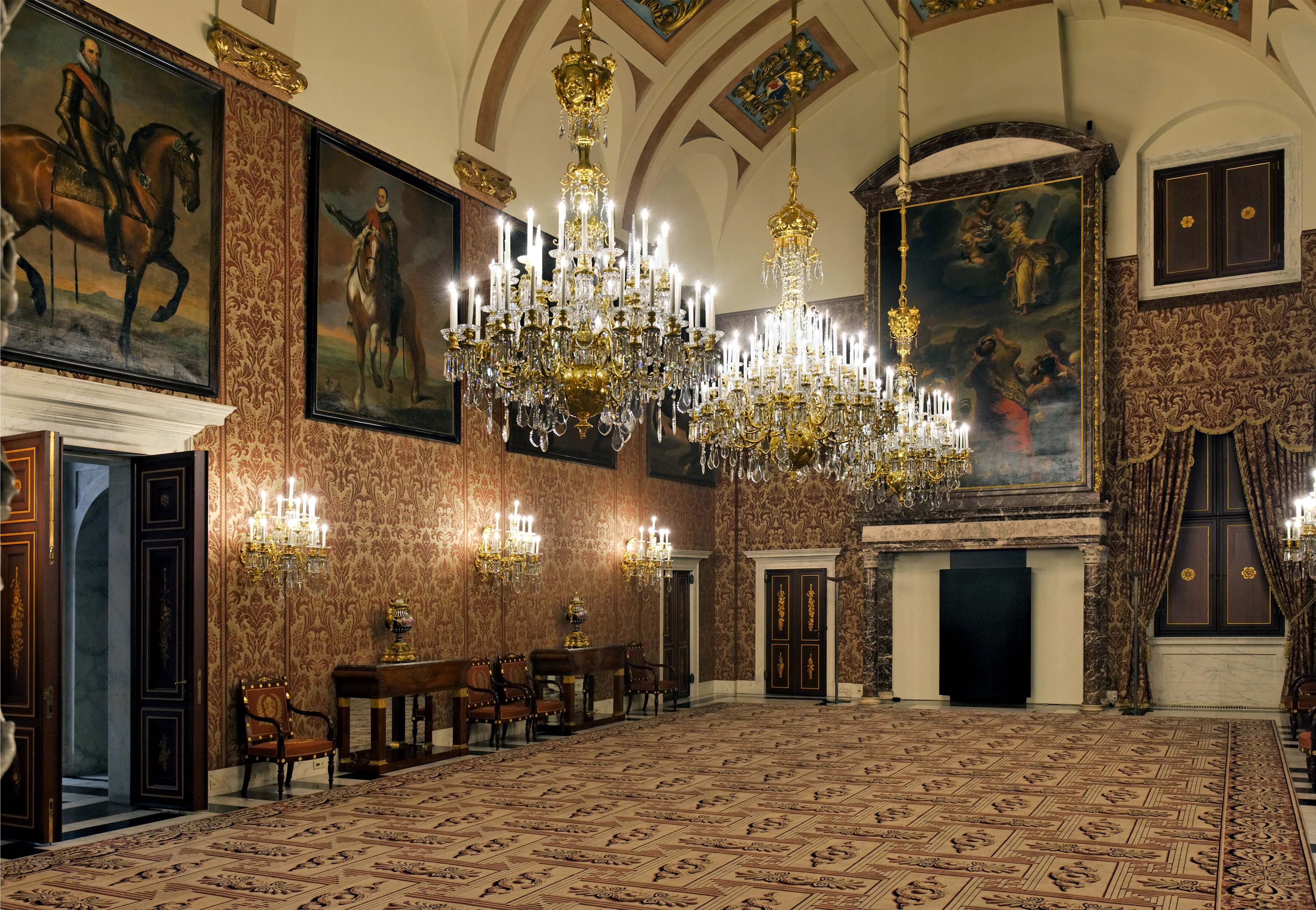
The city has many open squares (plein in
Dutch). The namesake of the city as the site of the original dam, Dam Square,
is the main town square and has the Royal Palace and National Monument. Museumplein
hosts various museums, including the Rijksmuseum, Van Gogh Museum, and
Stedelijk Museum. Other squares include Rembrandtplein, Muntplein, Nieuwmarkt,
Leidseplein, Spui, and Waterlooplein.
lunes, 25 de agosto de 2014
Infrastructure
Nowaday the world is victim of an accelerated phase of mass urbanization and mega cities are developing across the whole globe. This is the moment in which little cities must highlight to avoid stay against the process, and also to attract talent from around the world. Two cities are seen as innovation sources, due to their attempsments try to apply new ideas in their infraestructure: San Francisco and Amsterdam. Even though both are relatively small in comparison with the mega cities people see on tv , they are able to compete with them.
In this case, we will talk about Amsterdam. This city is the #2 destination in the world on the Lonely Planet’s list of cities to visit, and this recognition, and one of the principal reasons of its ranking is its unic and ecological infraestructure.
Amsterdam has an infrastructure based on the wellness of the environment and the citizens. This goal is fulfilled through the implementation of spaces, that allow the easy circulation in the city of ecological transports as public parkings with a cheap rate and recharging stations for electric cars, and bikeways for bicycles.
Bicycle Parkings:

Recharging Stations:

Day to day:
In this case, we will talk about Amsterdam. This city is the #2 destination in the world on the Lonely Planet’s list of cities to visit, and this recognition, and one of the principal reasons of its ranking is its unic and ecological infraestructure.
Amsterdam has an infrastructure based on the wellness of the environment and the citizens. This goal is fulfilled through the implementation of spaces, that allow the easy circulation in the city of ecological transports as public parkings with a cheap rate and recharging stations for electric cars, and bikeways for bicycles.
Bicycle Parkings:
Recharging Stations:
Day to day:
Suscribirse a:
Comentarios (Atom)